



I put a spell on you and now you’re mine. You can’t stop the things I do. I ain’t lying. – Screamin’ Jay Hawkins, “I Put a Spell on You”
Hard Copy Radio will deliver to you in print a sliver of the highest forms, machinations, and evolutions of music from this century and centuries past. This column will not recognize the imposed limits of colour, creed, sex, genre, nor any other arbitrary category that serves to divide and confine. Hard Copy Radio will solely recognize the merit and impact of a song on culture, society, art, and, most importantly, upon the soul.
Hard Copy Radio is a vehicle for the currently under-appreciated, unrecognized, and long-forgotten songs. It also seeks to analyze those quintessential songs that have informed generations, defined social movements, and given birth to new forms of art and expression. With Hard Copy Radio, these songs may once again be heard and appreciated by our generation. The remembrance of this music is essential to learning the lessons of our collective past so that we, members of this new generation, will not fall prey to seeing music as a bland corporate vehicle rather than a mode for questioning society and its values.
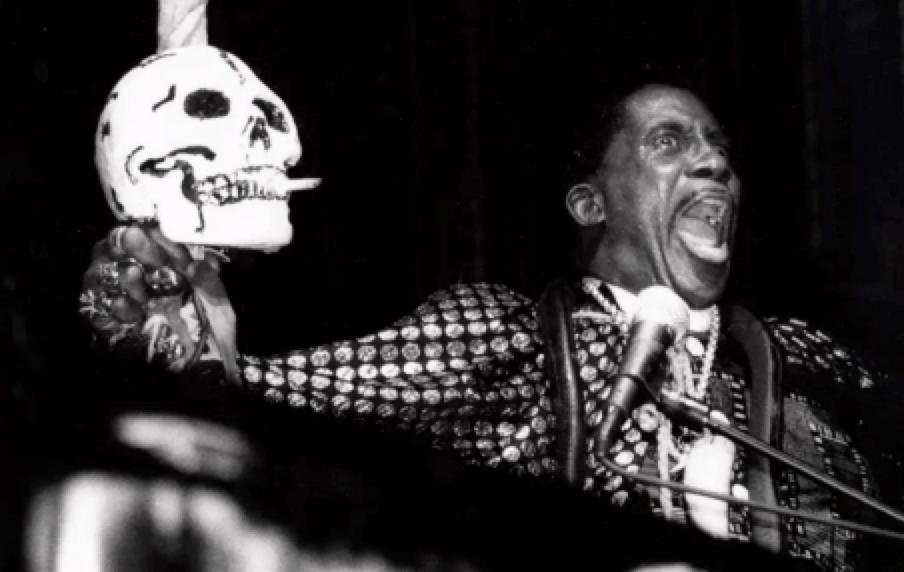
For the first installment of Hard Copy Radio, I have selected “I Put a Spell on You,” written in 1956 by classically-trained American artist Screamin’ Jay Hawkins (1929–2000). Hawkins had a reputation as an outlier who made music in a way never heard before. Cumulatively, Hawkins’ musical direction, stage persona, and subject matters defied the societal constructs of his era, the highly stifled and prejudiced 1950s America. Unlike the popular doo-wop sound associated with the 1950s, Hawkins’ sound was raw, agressive, and bluesy. He is often associated with the shock rock movement — a combination of rock music and highly theatrical performances. His eclectic stage persona involved props, costumes, and pyrotechnic stage effects to communicate symbols and motifs of voodoo, African culture, cannibalism, life, and death.
In the documentary Screamin’ Jay Hawkins: I Put a Spell On Me (2001), blues musician Bo Diddley, known for the song “Pretty Thing” which was featured in The Wolf of Wall Street (2013), said, “He was different, he was comical and scary, and that made him!”
Screamin’ Jay Hawkins originally wrote “I Put a Spell On You” to be a sweeping love ballad; however, by a strange twist of events one night in the recording studio, the song became a gritty blues rock song. In the 1950s, love was a very common theme in music; what sets this love song apart from the others of that era is its authenticity. Not only does the sound seriously contrast the polished ballads of that time, but the subject matter expresses the primal state of love and lust. The magic of this song is its skillful and visceral encapsulation of universally understood emotions of love, lust, heartbreak, and humanity.
“I Put a Spell On You” inspired the work of various musicians, directors, and forms of pop culture. Film director Jim Jarmusch was very good friends with Hawkins, and deeply respected him as an artist. Jarmusch used the song in Stranger Than Paradise (1984), and employed Hawkins as an actor in Mystery Train (1989). Recently departed David Lynch used the song in Lost Highway (1997), a notoriously frightening and paradoxical film that is hands-down scarier than any of the usual suspects in any Halloween film lineup. The Lost Highway version of “I Put A Spell On You” features an out-of-the-ordinary cover by American rock musician Marylin Manson, who transposed the classic, gritty blues version into a nearly unrecognizable ripping punk metal track. Incidentally, an altered version of “I Put a Spell On You” was also featured in the Disney Halloween classic Hocus Pocus (1993), performed by Bette Midler, Sarah Jessica Parker, Kathy Najimy, and The Skeletons.
Other great artists and bands also imbued their unique talents into the song, such as the world-renowned American jazz singer Nina Simone, and Eric Burdon of British rock band The Animals known for their hit “The House of the Rising Sun.” In addition, the American rock band Creedence Clearwater Revival, known for the hit “Fortunate Son,” did a blues rock version of the song that paid homage to Hawkins’ ripping vocals alongside a gripping guitar solo.
What Screamin’ Jay Hawkins did for music will never fade away because, as an artist and individual, he was genuine, sincere, and powerful. Hawkins’ artistic innovations transformed his era, inspired his peers, and continues to inform and disrupt the immense societal lexicon of art, expression, and culture. Like Jarmusch said in the documentary on Hawkins’ life and career, “The good stuff stays good, and the stuff that is not good just kinda passes away and Jay will never pass away, his work will never fade away. Cause there are always people that look for the good — the real shit is in the margins, not in the mainstream — and that stuff stays alive.That stuff will always be there…People that died with nothing in crummy hotels, they are the true geniuses…We look back and say wow, look at the gifts to our culture from these people. Jay is [no] different from that. We’ll never lose what he gave us.”
