


The Social Reckoning, dir. Aaron Sorkin
The sequel to 2010’s critically acclaimed The Social Network, The Social Reckoning thrusts Mark Zuckerberg back into the spotlight over Facebook’s failings. Returning as writer and replacing the previous film’s director, David Fincher, Aaron Sorkin presents audiences with a story based on the real-life events of former Facebook data scientist turned whistleblower Frances Haugen (Mikey Madison). Haugen, working with Wall Street Journal reporter Jeff Horowitz (Jeremy Allen White), aims to expose Facebook’s flawed and harmful practices, as well as its creator, Mark Zuckerberg (Jeremy Strong).
Sorkin’s directing, combined with the portrayals of the actors in their respective roles, makes for an overall striking film, though there is some left to be desired. Strong portrays Zuckerberg well, sounding and looking eerily like his real-life counterpart, but the script reduces him to a one-dimensional, robot-like character. This differs drastically from his portrayal in the previous film by Jesse Eisenberg. Madison and White showcase chemistry, as does Frances Haugen. Coming off of her Academy Award-winning performance in Anora, Madison admitted to facing pressures to perform well and adjust to Sorkin’s unique filmmaking style. Despite the pressures she faced, she overcame them with an empathetic and bold performance.
Sorkin’s writing is where the film slightly falters; aside from the aforementioned lacking characterization, the sequel is not as grandiose as its predecessor. When interviewed by The Hollywood Reporter, Sorkin mentioned that he does not view Zuckerberg as a villain but as an antihero. “An antihero, the intentions are good: ‘I want to connect everybody in the world.’ But the way an antihero goes about doing it, the decisions they ultimately make are bad,” he explained. Sorkin should have given more screen time to Strong to allow him to flesh out Zuckerberg and show his misguided efforts, as his performance in the film made him appear more like a villain than an anti-hero.
For many, it is hard not to compare the quality of The Social Network to The Social Reckoning. On its own, The Social Reckoning is a solid film that would have benefited from a bolder and more nuanced script. I rate The Social Reckoning a 3/5.
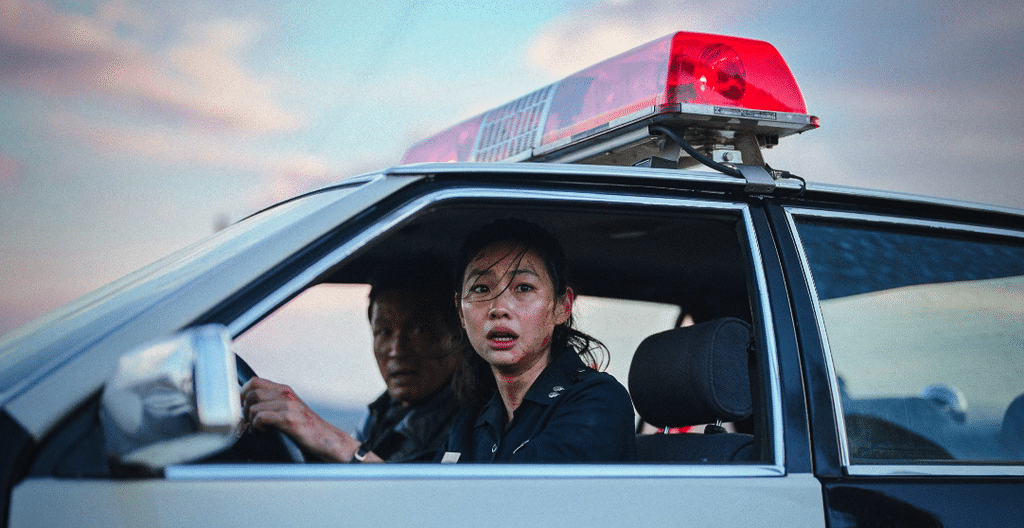
Hope, Dir. Na Hong-Jin
The 2020s have seen the rise of a new star in the film world, and its name is “chastened optimism.” This year’s Project Hail Mary and 2025’s Superman had audiences face the looming, existential threats of climate change and billionaires head-on, via the lens of a science teacher forced to save Earth and superheroes solving a fictional global conflict. Western pop culture adores stories that incite our strengths to take us beyond our physical or educational limitations, showcasing our innate ability to overcome any global crisis.
Na Hong-Jin’s Hope is primarily a monster movie that antithetically counters the cultural optimism the West has been building for the past half-decade. Na isn’t necessarily discoursing on current political events; rather, the film parodies the likes of our underdogs and superheroes. Ironic in title, Hope further questions the extent to which these stories can be fulfilling before they become willfully ignorant.
The film follows police chief Go Bum-Seok (Hwang Jung-min) as he navigates a South Korean village named Hope Harbour. Following a string of mysterious cattle deaths throughout town, first assumed to be the result of a stray tiger, Bum-Seok slowly uncovers that the culprit may be something far more alien: a mysterious creature rampaging through the harbour. Hwang plays Bum-Seok extremely humanely. As a character whose profession is perceived as valorous, there’s an abundance of pride in Bum-Seok’s command of others in the wake of an alien invasion. However, Hwang also isn’t afraid to let bits of fear and tension burst out during moments of downtime, grounding his character and humanizing him to the viewer. Na sprinkles in moments of comedy throughout, allowing Hwang to show off a vulnerable side; these emotional moments occur in a way that feels remarkably natural.
The film also features Jung Ho-yeon, dubbed “Korea’s Next Top Model” by Vogue, most well-known for her role as Kang Sae-byeok in Squid Game. She arrives an hour into the film’s runtime to assist Bum-Seok as policewoman Sung-ae. Although Sung-ae’s role is primarily contained to comic relief, moments of stoicism and pride occasionally seep through. Jung’s performance is a lot louder than the rest of the cast, providing relief to the audience amidst a largely grim experience.
Throughout the film, several distinct aliens begin to terrorize the secondary characters, whose phenomenal performances make them feel like protagonists in their own right. However, Na has fun with the audience’s expectations and pulls the rug out from under them, ensuring that nobody in the film feels truly safe from death. Hope is actively antagonistic towards the audience, deflating any real optimism for the characters as they slowly learn new information about the alien invaders, revealing that they’re leagues beyond any kind of power that the human spirit can muster. However, this bleakness has the added effect of allowing Na to heighten an already tension-filled and unsettling atmosphere. The film’s CGI has been heavily criticized for looking out of place and cheap, but I believe it adds to the alien nature of the creatures. From the characters’ perspective, the antagonists are so incomprehensible they might as well not be fully rendered.
In Hope, nobody is really a hero. Most of the cast focuses on surviving rather than defending themselves or the harbour, and the moments where someone attempts to embody that courageous spirit are when Na’s thesis is most apparent. The lone human is only as strong as they can physically handle, despite what our media often claims. During their encounters with the creatures, Na strips the self-proclaimed heroes bare of their pride and confidence until they have no choice but to run. An integral part of what makes Hope so gruellingly upsetting is when it actively kills any kind of romanticism that one might expect to find in a disaster film. In the context of present-day anxieties and a world increasingly dominated by conflict, Hope‘s sullen worldview feels like a poignant response to these tired themes.
However, it’s important to note that Na sees the potential in making a thrilling set piece from this, dropping horses and cars struggling to outpace the devastating creatures in a high-speed chase. The film’s action feels like riding a roller-coaster – any sign of relief is immediately followed up with narrow breezeways and maze-like forests, physically exhausting the audience. Strangely, this whiplash of hellish experiences actually feels refreshingly new and exciting. What Na ultimately ends up with is an anti-film within the standards of 2020s cinema through its prose, but also an exceptional take on the action movie experience.
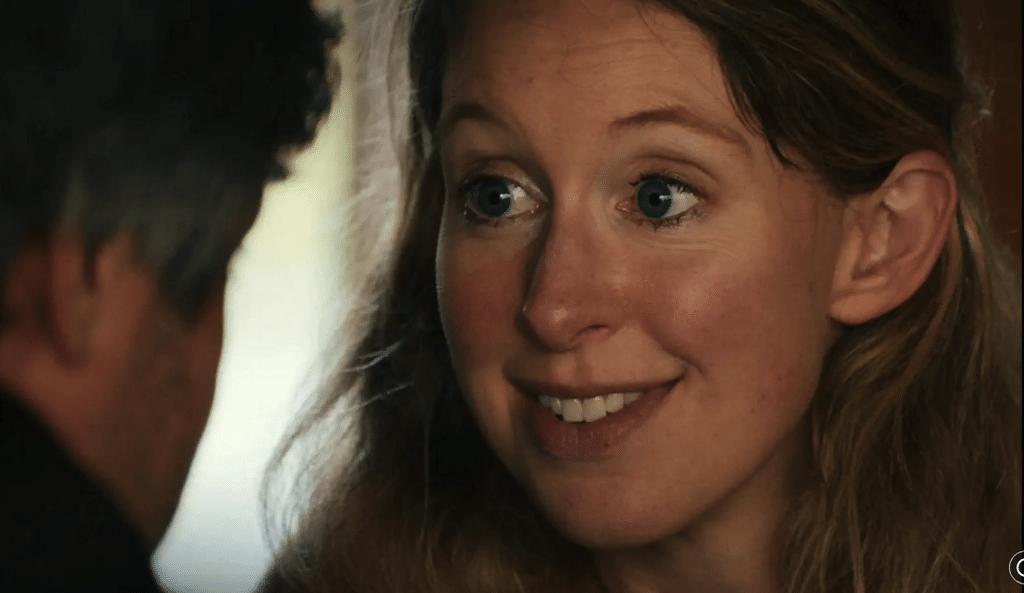
You Can See Everything, Dir. Nathan Fielder and Lance Oppenheim
“Oh my God” is the prevailing phrase following this screening; “Do you think she was really lying?” is a close second. In Nathan Fielder and Lance Oppenheim’s You Can See Everything, we are given a window into the life of disgraced Theranos founder Elizabeth Holmes just one month before she is sent to federal prison for fraud. You Can See Everything is another major number from Lance Oppenheim, fresh off his Primetime release, while co-director and -star Fielder comes
well-practiced from his television series Nathan for You (2013-2017), The Rehearsal (2022-), and The Curse (2023). If my screening was anything to go off of – a 2 pm screening on a Thursday, and yet it was practically sold out – You Can See Everything is a rare instance of what I like to call a DocBuster, which is a documentary with as much cultural cachet as a Marvel film. This film’s bizarre structure, revealing interviews, and unique formal and creative elements will engage anyone, including viewers with no interest in or knowledge of Holmes’ story, and have them in deep discussion well after they’ve finished watching. The film’s title is an allusion to Holmes’ insistence on the documentary crew being allowed to see every aspect of her life because she “has nothing to hide,” truly believing herself to be an innocent person who never did anything intentionally wrong. That is, at least, that is what she tries to convince Fielder and her captive audience; whether or not you believe her is a separate question.
As we follow Holmes and her new husband and business partner, Billy Evans – because, yes, the two have a new company that is picking up where Theranos left off – it becomes increasingly apparent that Evans has an unreasonable amount of control over Holmes’ life. The film leaves the audience to question whether this is another example of Holmes falling into a predatory relationship, akin to her decade- long affair with Theranos co-chair Ramesh “Sunny” Balwani, or whether she intentionally seeks out such partners. Is she being manipulated or is she the manipulator?
The film poses many questions about the nature of deception and narrativization, emphasizing the power of filmmaking as a means of duplicity. You Can See Everything is like a magic trick being performed right before your eyes, something you simply cannot look away from. Highly, highly recommend!
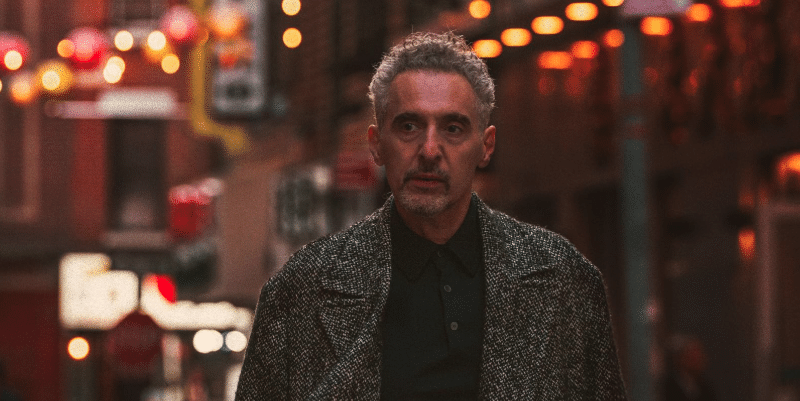
The Only Living Pickpocket in New York, Dir. Noah Segan
Better known for his acting roles in all of Rian Johnson’s films, Noah Segan is releasing his sophomore directorial feature, which details the life of an aging criminal in an ever-changing world. The Only Living Pickpocket in New York tells the story of Harry (John Turturro), a pickpocket who has skirted responsibility for most of his life, being made into a caretaker for his disabled wife and accidentally getting caught up in a scheme far bigger than his typical petty theft. When he accidentally steals the wrong thing from the wrong person, Harry is given more than he is prepared to handle in order to get it back, which involves reopening old wounds while realizing his glory days are behind him.
The Only Living Pickpocket in New York is a brilliant star in John Turturro’s otherwise constellatory career; he proves time and time again that he has the range and depth needed to lead any project. The film also features the supportive acting talents of Giancarlo Esposito, Steve Buscemi, Will Price, and Tatiana Maslany. While each provides the perfect amount of understatedness and authenticity, Turturro’s performance shines above all through his performance as Harry. However, Maslany is particularly memorable in her small part as Harry’s estranged daughter, Kelly, and Buscemi and Esposito are as charming as ever in their respective curmudgeonly roles.
Harkening back to the filmmaking styles of the 1970s, The Only Living Pickpocket in New York
is something of a neo-noir heist film, in the vein of The Long Goodbye (1973), which favours dialogue and characterization rather than grandiosity or violent shootouts. A quiet film that lives in its moments of downtime, the film emphasizes the passage of time and the displacement Harry feels as an outdated archetype in the modern world. Its visuals are unassuming, and while not particularly unique, they are effective in telling this story. The film is slight but affecting, and unafraid to reveal the seedy underbelly of this inviting character and exciting narrative.
