

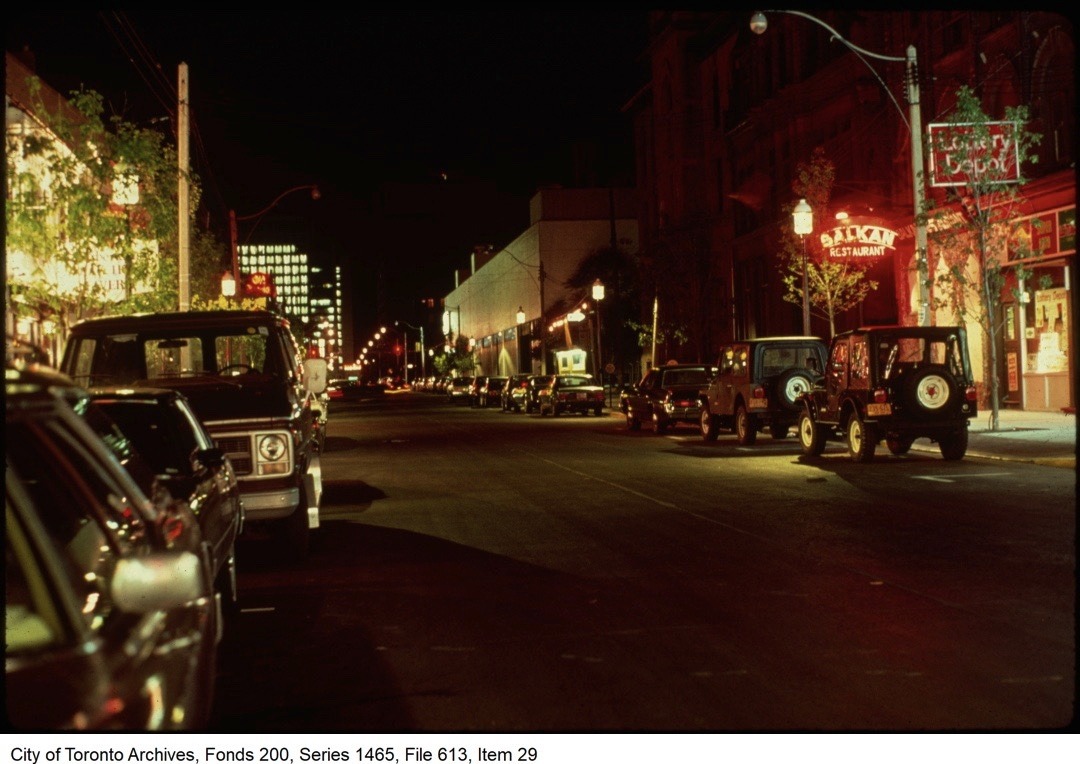
Collective Views: A Symposium of Photography in Toronto was a two-day photography collaborative event hosted by the Museum of Contemporary Art (MOCA) and the Art Gallery of Ontario (AGO). Spanning from 10:00 a.m. to 5:00 p.m. on Mar. 10, and 2:00 to 5:00 p.m. on Mar. 11, the symposium featured a variety of Indigenous, queer, and feminist voices, exploring several stages of photography in Toronto. The symposium was broken up into three main sessions: the 1970s–1980s and 1990s–2000s were held at MOCA followed by a session on the 2010s–present held at the AGO. The two-day symposium ended with a keynote speech moderated by York University Associate Professor Lily Cho.
The 1970–1980s session was held in the morning and early afternoon on an unseasonably warm day at MOCA, with presentations from Stephen Bulger (gallerist), June Clark and Laura Jones (artists), Adelina Vlas (curator), Brenda Mitten and Greg Staats (artists), Sara Knelman (historian), and Jordan King (writer and curator). Knelman and King’s presentations were particularly striking because of their clear calls to action aimed at young researchers and creatives.
Knelman, a writer, curator, and lecturer at Toronto Metropolitan University, dug deep into Impressions for her project: a 1970s student magazine that blurred the line between photography, poetry, and artistic vision. Publishing two issues per year with some hit editions such as Open Passport (1073), a photobook by John Max, Impressions eventually became C Magazine, still publishing to this day. Knelman suggests that the students who contributed to Impressions “made the community they wanted and needed” through their photography-based publications.
She notes that as she did this research, it only led her to realize how much more there is to learn, and she hopes that her presentation will inspire young people to take on the work she started through an MA or PhD project. Knelman, who has a PhD from the Courtauld Institute of Art, points out the importance of taking on archival work at this moment where our cultural stories are being forgotten, and to do this by diving deep into certain “vessels of history” like Impressions. Print and photo-based archives can be a gateway to a past that can often seem foreign, inaccessible, and intangible.
She ended her presentation by urging the crowd to not just think about what has been lost as print photography has dwindled, especially around the creative energy that exists in that particular type of photography, but also what has remained, and where that energy has gone now. “How can we locate it?” she asks. “How can we support it, and how can we make sure that we are archiving it for the future?”
Jordan King’s work also demonstrated a deep care for archival research. Originally from Vancouver, King became interested in nightlife and the history of communities during a time when she was discovering herself and the possibilities of self-actualization through hosting and attending parties. As the 2023 Artist in Residence at TheArQuives, Toronto’s premier LGBTQ2+ archival collection, King was able to research and contextualize the queer history in nightclubs, cabarets, and drag venues on Yonge street, looking specifically at the ways in which stage performance offered opportunities for fulfillment and self-discovery. King presented an exhibit in September 2023 that centered around photographic and video archives from this scene. She also shared some of the challenges that she faced with her work, such as copyright barriers that limited her ability to use certain photos for her exhibit and her presentation at Collective Views. She recounted the time she went to Montreal to meet with Rafael Bendin, a photographer, to convince him to allow her to use his backstage shots of drag performers for her research.
King concludes that despite the hardship she faced, the work was incredibly rich, valuable and fulfilling. “I really feel like I’m only just scratching the surface, and that it’s been a complex task to try to put some of these pieces together — a little bit of a jigsaw puzzle between public archives, independent photo collections, and the community archives.” Having recently published an article on the “Erasure of urban detritus: Toronto’s Sin Strip,” King ended her presentation with a call for young writers and researchers to take on this or similar projects, and learn more about Toronto’s diverse history through “visual access points,” and to make use of resources like ArQuives and the City of Toronto Archives.
The first session ended with a roundtable panel with all the 1970s–1980s presenters, which was followed by a one-hour break during which many people went to the second and third floor of MOCA and viewed the Jeff Wall Photographs 1984–2023 exhibit. Jeff Wall, an internationally celebrated and award-winning Canadian photographer, visual artist, and writer, began his artistic journey as a child growing up in Vancouver. The photography at the exhibit showcased a diversity of settings and subjects: the snowy mountainous landscape of the West coast, dingy alleyways of New York’s nightlife, and domestic scenes disrupted by chaos, such as the photo of a regular lively diner — only unsettled by a man doing a backflip. His work is contemporary, shocking, colourful, and leaves the viewer dizzy with the vast array of detail in each image and the stories that they carry.

The final session of the day took a look at the photography scene in 1990s and 2000s Toronto, and featured voices such as Tal-Or Ben-Choreen (historian), Sanaz Mazinani (artist), Philip Monk (writer and curator), Ken Montague (collector), Jake Peters (artist), and Kitty Scott (curator).
Jake Peters was working at a research lab at UofT in 1985 when he learned that he had AIDS, which sparked a difficult time in his life but also inspired decades of activist work. Four years later, Peters snuck into the Fifth International Conference on AIDS in Montreal, which is around the time when he started taking photos to capture the activism around AIDS and the lives and resistance of people living with it. With the help of a media publication in a German magazine, Peters was able to work for Xtra Magazine—an LGBTQ2+ Toronto-based magazine founded in 1971 that was moved entirely online in 2015 and still publishes. He worked for the paper for four years and produced images showcasing queer joy through parades, street events, and drag performances, as well as loss.
Through his work, he also raised awareness about the AIDS crisis worldwide. Peter’s presentation was heavy with the grief of lives lost to AIDS because of government failure across the globe, as he showed images of the AIDS conferences and protests he attended in San Francisco, Italy, Japan, South Africa and several other places. He attended his last event in 2012. “These events were breaking my heart,” he shared in a moment of vulnerability.
The second day of sessions was held at the AGO on a warm but rainy day, and featured presentations by Nadia Belerique (artist), Robert Burley (artist), Julie Crooks (curator), Marina Dumont-Gauthier (historian), Jimmy Limit (artist), and Gaëlle Morel (curator), among others. Burley spoke about a project he undertook from 2005 to 2012 called the Disappearance of Darkness, where he catalogued the decline of traditional, analogue photography and artmaking in the city by paying close attention to local businesses.
One of the images he showed during his presentation depicted a photography shop on Queen Street with a sign that read “Closed due to retirement,” which, to Burley, signalled a global shift away from the world he used to know. Soon Burley found himself in Rochester, New York, where a quarter of the city’s population was employed by Kodak, a leading photography company. At this pivotal moment, Burley witnessed tens of thousands of layoffs from the company and the demolition of close to 50 of their buildings, as seen in the image below taken in 2007. Burley’s project moved to other companies such as Polaroid in Boston, Massachusetts, which ceased operations in 2008.
Disappearance of Darkness is a haunting look at the loss of the art and business of photography around the globe and in Toronto, marking the importance of keeping the craft alive by funding dark rooms, photography companies, and other art businesses.

The Collective Views symposium offered a unique insight into the past, present, and future of Toronto’s photography scene, allowing audience members of all ages to reflect on the ever-changing role of art, archives, and community in urban spaces. The city must be thirsty for photography and discussion, because the event was fully sold out, and there were several mentions of needing more events like it.
Find out more about each presentation here, and keep an eye on MOCA’s site to learn about upcoming events and exhibits.
