

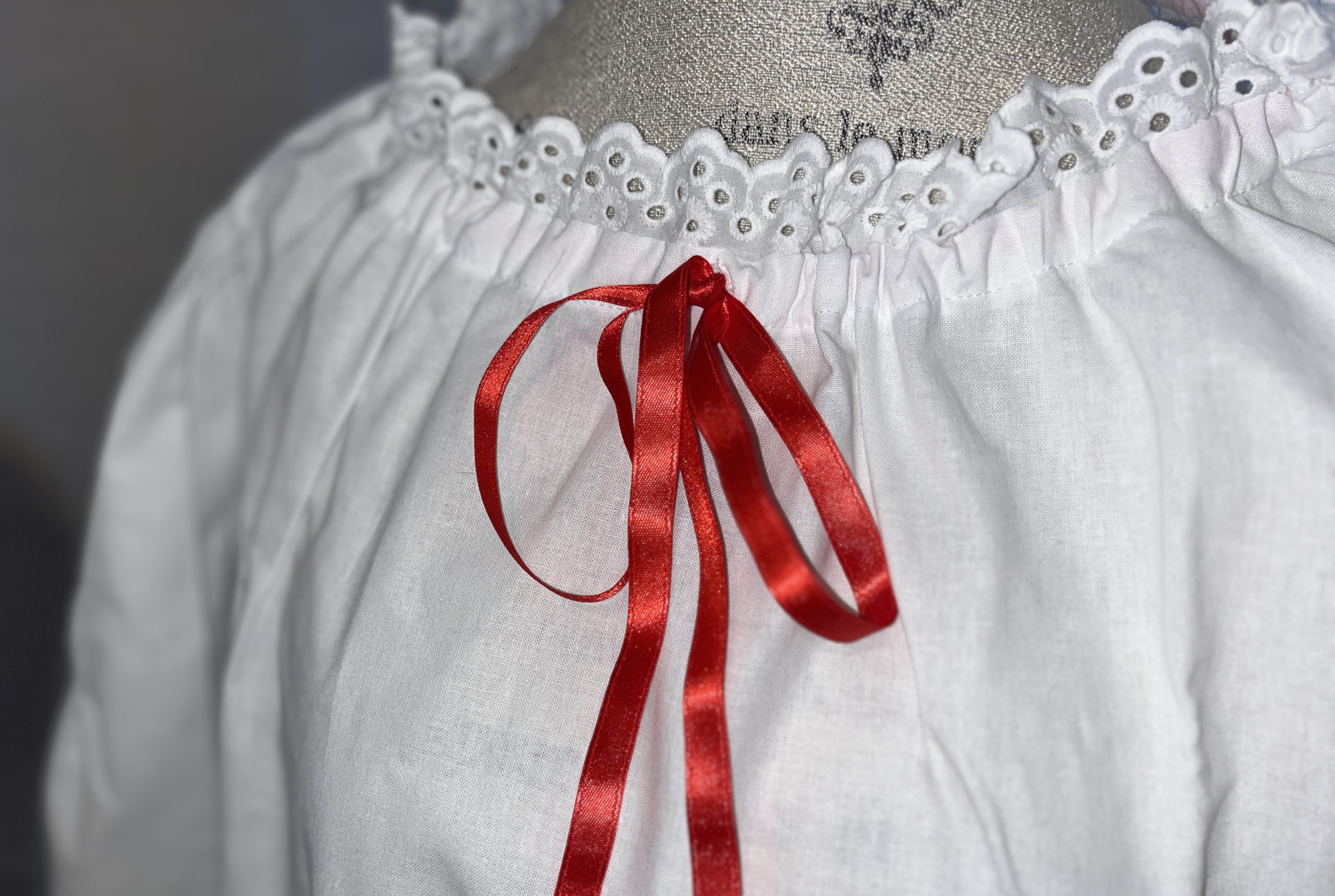
I finally did it — I ordered a traditional costume from Italy. The process wasn’t easy. In fact, it was more complicated than I could have ever imagined. The costume is custom-made and consists of just a blouse, skirt, and some accessories, but part and parcel with my order was one burning question: Why is it so hard to find a traditional Italian costume?
A few months ago, I was on the hunt for traditional clothing from my family’s hometown. Unsure of where to start, I decided to email some traditional folk dance groups in the local area. Italy has a big folk dance culture, with groups representing towns and cities across the country. While these groups can be joined by any member of the public, most of them didn’t disclose where they got their costumes from.
Soon, I was back at square one. After further digging online, I eventually stumbled upon an influencer from my family’s province who specialized in representing the culture of our region. I decided to send her a DM on Instagram, and to my surprise, she responded by kindly directing me to the local folk administration of a town in our region.
Finally, after I contacted another folk group about 30 minutes away from my family’s hometown (but still in our region), I was connected with a woman named Paola. She gave me her prices for each piece of the traditional costume and I ordered two items: a skirt and a blouse. The grand total, including shipping, totalled about $200 CAD. At long last, I had succeeded in my quest. But amidst all the relief I felt was still a sense of wonder and frustration. So why is it so hard to find a traditional Italian costume? Well, the answer is complicated.
Surprisingly, most people are unaware that Italy even has traditional clothing. While Milan is one of the world’s fashion capitals, and the Roman toga is well-renowned, “traditional Italian apparel” might not generate any specific mental image. The unique thing about Italy is that it’s a relatively young country, formed in 1861. As a result, Italian traditional clothing is regional, with the country lacking an official “national dress.” Additionally, there is a strong north-south divide — most popular traditional clothing comes from the rich North, especially the Venice area.

Many Italian stores sell traditional shoe slippers called Friulane, also called Furlanes, the Venetian tabarro (a traditional cloak), and traditional Carnival masks. These masks include le maschere della commedia dell’arte (traditional Art Comedy theatre masks). While sold and worn nationwide, these items are most concentrated in the city of Venice and other northern parts of Italy. The region has a long history of international trade , and where there’s money, there’s the ability to preserve. I came across online sites shipping these more popular items to Canada, but found myself empty-handed in terms of brick and mortar retailers.
But aside from a few iconic pieces, Italy is a nation of regional folk costumes. Every region has its own version, and in some cases each town will have their own dedicated costume. The island of Sardinia is the most popular example of this, with variations of ornate and expensive traditional Sardo clothing commonly worn throughout the region. However, on the mainland and the island of Sicily, these folk clothes are more exclusive. Traditional dance groups mainly wear them and order them from specific sarti e sarte (seamsters and seamstresses). This means everyday people don’t often own them unless they join these groups or know someone who can make them.
In Canada, you have to be lucky enough to know someone. For Brianna Furtado, president of the Canadian Italian Association of York (CIAOYork), that someone was her nonna (grandmother). It also helps to be part of a traditional society. Brianna grew up as part of the Famee Furlane, a social and cultural club located in Woodbridge for “men, women, and children of Friulian ancestry.” Friuli is one of the northernmost regions of Italy. Within the Famee Furlane, Brianna performed as a traditional folk dancer, called a balarin, wearing traditional costumes made by her nonna Anna, who “loved the Famee Furlane because it offered hope, connection and a sense of prosperity to a small immigrant community.”
Indeed, I waited over a month to acquire my dress in the mail. But now that it’s here, the next challenge is figuring out the appropriate occasion to wear it. Most of the traditional societies of my regions are located in places like Hamilton or Windsor, so if I want to join, I’m making a long trip. Even within Italy, the ability to own a traditional costume and join a folk dance group varies from region to region. But Italian traditional costumes exist and should be celebrated, not reduced to being seen at the odd festival, or locked behind a hard-to-find seamstress. Like all traditional wear, they represent the rich, colourful, and diverse cultures of their regions and nations of origin.
As diasporas move throughout our increasingly globalized world, wearing and sharing our heritage allows us all to form greater appreciations for one another. Despite the struggles along the way, I’m happy to have invested in this process of cultural exchange.
