
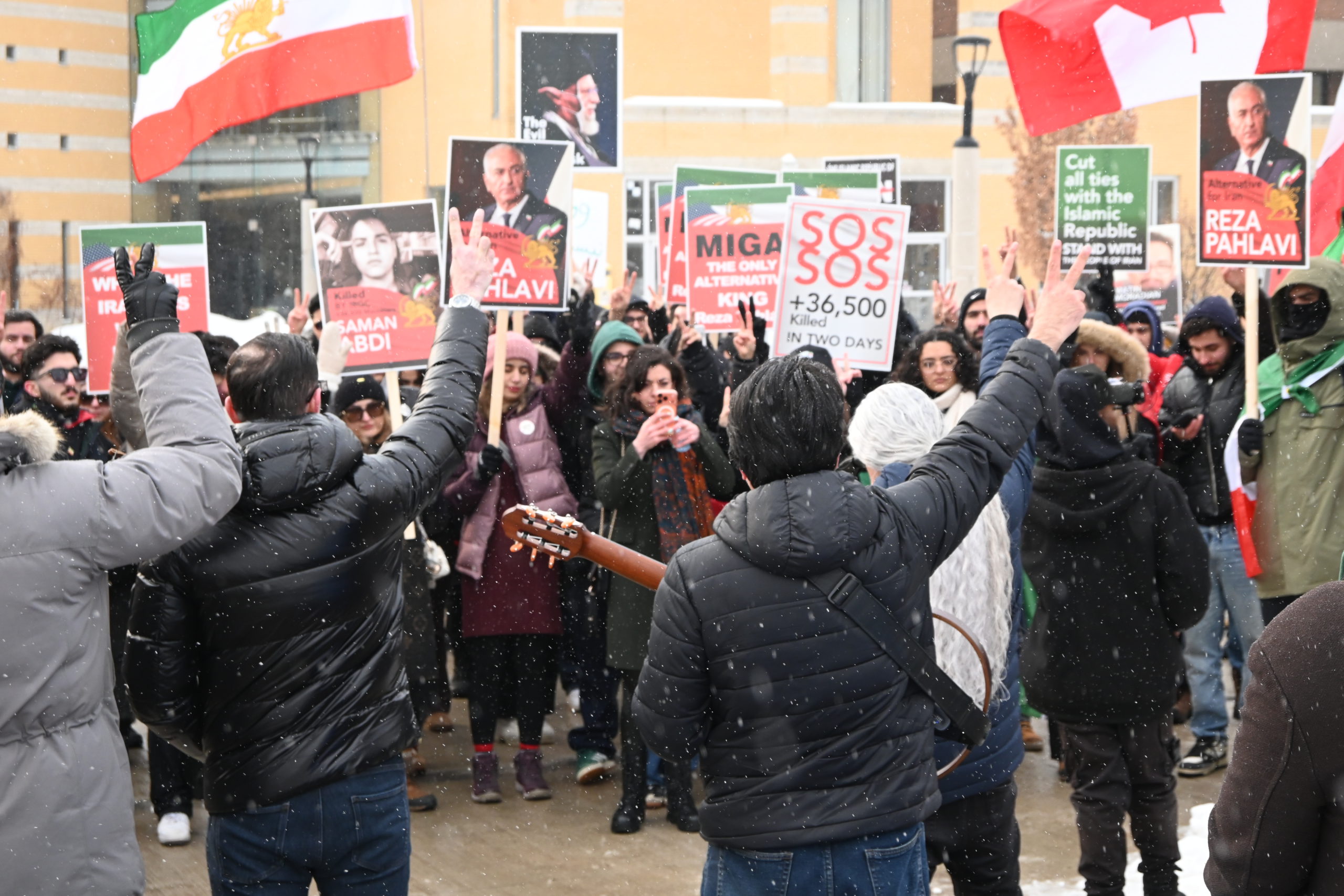
Amid Iran’s deadly protests, Iranian Canadians have taken to the streets in solidarity, hoping to draw international attention to the current situation. Several protests have been organized at York University’s Keele campus; among those protesting is Iranian Unity @ York University (IUYU), a student-led organization focused on Iranian culture, community, and dialogue at York University.
IUYU is also committed to standing for “freedom, human rights, and justice for Iran and Iranians worldwide.” For co-president Shays Fattahian, IUYU exists as a platform where students can share concerns and accurate information while organizing in response to the events in Iran. Their goal is “to transform collective grief, anger, and hope into awareness, solidarity, and tangible support for Iranians both inside and outside of the country.” One example of this support is IUYU’s work to provide financial resources to students that have been unable to receive money from relatives living in Iran.
But what exactly are Iranians protesting for? Fattahian highlights that there is currently widespread misinformation surrounding the protests. He adds that some narratives frame them as Islamophobic or as movements propagated by foreign governments, but these portrayals “erase the lived reality of millions of Iranians.” As Fattahian explains, “The protests are organic, complex, and deeply rooted in decades of social, political, and economic frustration.”
Women continue to protest systemic oppression, echoing back to the “Women, Life, Freedom” movement following the death of Jina Mahsa Amini, who was arrested by the Iranian “Morality Police” for violating Iran’s hijab laws. Workers and business owners are protesting Iran’s failure to recover the collapsing economy, while youth are protesting severe cultural repression and a lack of career opportunities. Fattahian points out that “what we are witnessing is an entire society speaking at once — across class, gender, age, and ideology.”
Protests initially started on Dec. 28, 2025. Since then, the Iranian state has taken a heavy-handed approach in their attempts to maintain civil order. With tens of thousands of protesters taking to the streets to protest the government, the government, in turn, continues to kill their civilians. Iran’s Supreme Leader Ayatollah Ali Khamenei has stated that “rioters must be put in their place.” Death toll estimates vary, and media reports have been minimal due to the telecommunications blackout organized by the government. Relatives overseas have also struggled to contact loved ones.
The Iranian government has acknowledged 3,117 deaths as of Jan. 21, 2026. However, the U.S.-based Human Rights Activists News Agency (HRANA) has verified more than 6,000 deaths and has 17,000 more under investigation, potentially totalling over 22,000. Doctors based in Iran have estimated 33,000 or more deaths. Some have been beaten, others shot — some young, some old. Even in death, the victims have been further mistreated, their bodies thrown about in front of their own families. Families are reported to have searched mounds of body bags for relatives in the hopes of burying them, all the while chanting “Death to Khamenei.”
For Iranians living abroad, Fattahian points out that being overseas means “exposing contradictions within the current system, such as officials who publicly denounce Western countries while privately benefiting from them.” Beyond enabling these external insights, the diaspora has played a key role in providing a voice to all Iranians. Fattahian highlighted the symbolic reclamation of historic Iranian symbols, including the Lion and Sun flag, as expressions of cultural continuity and resistance.”
Fattahian concludes that, “as attributed to the ancient Iranian master Zoroaster, the path in life is truth.” IUYU and himself hope to raise awareness and create unity, demonstrating that change is possible when people “stand together for a good cause.” Most importantly, they believe a “more just and humane future is not only necessary, but expected.”
