
My first real lesson about freedom was not philosophical. It was psychological.
When you grow up in a difficult or traumatic environment, you carry habits into adulthood without realizing where they came from. Certain reactions feel like personality. Certain fears feel like intuition. Certain patterns feel rational or “normal.”
Then you are introduced to other perspectives, enter different homes, friendships, and ways of living, and realize not everyone learned the same tendencies you did.
What once felt universal begins to look inherited.
That friction clarifies what once felt automatic. Many responses are habits formed in one environment and projected onto every one after. Without consciously interrupting that trajectory, you may mistake repetition for freedom, reenacting a history you never chose.
That realization changed how I thought about politics.
Perhaps societies inherit habits much as people do—not only habits of behaviour, but of thought.
Ways of classifying the world, deciding what counts as progress or justice, and what qualifies as freedom. By the time we debate political ideas, we have already inherited the language through which those debates are understood.
Long before I could explain liberalism, I knew what freedom, rights, democracy, and progress were supposed to mean. I inherited their definitions before I inherited the habit of questioning them.
That raises an obscure question: How much of what we call political freedom is genuinely chosen, and how much is simply history speaking through us?
We imagine power as something unmistakable: governments passing laws, armies crossing borders, empires occupying land. But history leaves behind more than institutions.
It leaves language.
Empires withdraw, but their vocabulary is harder to evict.
Discussions of decolonization often begin in the wrong place. We imagine colonialism as territorial domination, but conquest has always required something more durable than land: the power to define civilization, progress, rationality, and political order itself.
Language is never simply descriptive. It establishes the standards by which reality is judged.
Few societies oppose freedom in name. But if nearly everyone claims to value it, why do political disagreements remain so profound? Perhaps because what differs is not whether people value freedom, but who has the authority to define it.
In much of the contemporary world, that authority speaks through liberalism: individual rights, autonomy, equality before the law, representative democracy. Granted, these ideas have shaped constitutional government and secured real liberties. That was never in question. The question is how one tradition became so privileged that its vocabulary is often mistaken for political neutrality itself.
Every civilization organizes itself around a vision of a good life. Some elevate communal responsibility; others religious obligation, social harmony, or national identity. Liberal societies privilege individual autonomy, an ideal embodied in the American Dream. None of these visions emerge from nature. Each is a philosophical inheritance, yet some become so familiar that they stop appearing inherited at all.
Walk into a political philosophy classroom and that inheritance becomes visible. You meet Hobbes, Locke, Mill, and Rawls. They deserve to be there. But why do they define the centre? Why do Islamic, Confucian, African, or Indigenous political traditions often appear as “alternative perspectives” rather than foundational ways of asking what freedom and other philosophical concepts mean?
The distinction is subtle, but powerful.
One tradition becomes philosophy. The others become culture.
One frames the political questions. The others are invited afterward to comment.
This reveals something about intellectual authority; Who gets to define the terms of the conversation before it begins?
The most effective systems of power do not always silence dissent. Sometimes they define the vocabulary through which dissent is allowed to make sense.
And that brings us back to colonialism.
Formal empires relied on visible power—occupation, administration, extraction, force, but it also taught which ideas counted. When colonial governments disappeared, those habits of thought remained in institutions, politics, classrooms, and public debate. Once one tradition dominates, everyone else must speak its language to be heard. Whether this means invoking rights, democracy, autonomy, and freedom, even when those words mean something entirely different contextually.
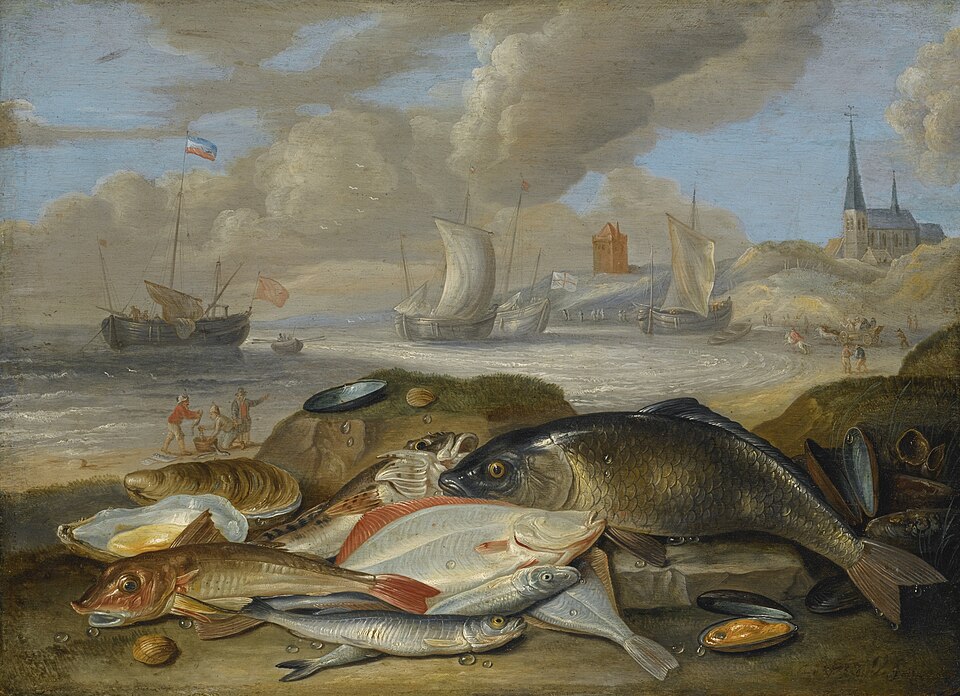
There is an old saying that a fish is the last creature to discover water—not because water is hidden, but because it is everywhere. Political traditions can become much the same.
Perhaps decolonizing the mind demands not replacing one orthodoxy with another, but recognizing when history has disguised itself as common sense.
Empires may surrender their flags. To surrender their language, however? That is a lot harder to do. The question is no longer whether we continue speaking it, but whether we remember that it has an accent.
Perhaps freedom begins where inheritance becomes visible.
You enter the world inside languages, beliefs, and histories you did not choose, and mistake them for your own. Maybe we never thought to question the system because it was the same one that taught us what questioning was supposed to look like.
But awareness changes the terms of that inheritance. Once we see what has shaped us, we no longer have to repeat it unconsciously.
We may never be free from influence, history, or power. But we can become free in relation to them. To think with intention is to interrupt what feels inevitable.
And maybe true freedom is not creating yourself from nothing, but choosing what, from everything you inherit, is allowed to remain within.
